
Combi Boiler Flow Temperature Guide: Save Up to 8%
Energy Saving Advice: How Reducing Your Combi Boiler Flow Temperature Cuts Heating Bills
Combi Boiler Flow Temperature Guide:
In an era of rising energy bills across the UK, finding quick, practical ways to improve household efficiency is top of mind for many homeowners. While insulation upgrades and radiator replacements offer long-term benefits, one of the simplest and most effective energy-saving tweaks requires no tools, costs zero pounds, and takes less than two minutes to complete.
By simply lowering the heating flow temperature on your combi boiler, you can reduce your annual gas consumption by up to 8% without compromising on home comfort.
At M&R Group, our Gas Safe registered heating engineers regularly advise customers on optimizing their heating systems for peak performance and lower running costs. For more practical advice on maintaining your home heating systems, explore our full collection of heating and plumbing how-to guides. This comprehensive guide explains what flow temperature is, how condensing technology works, step-by-step instructions for adjusting your setup, and when to seek professional advice.
What Is Combi Boiler Flow Temperature?
The flow temperature is the temperature to which your combi boiler heats water before pumping it through your pipework to your radiators.
Historically, UK heating systems were designed to operate at a high default flow temperature—typically 70°C or 80°C. While this high setting heats up cold rooms very rapidly, it causes modern boilers to operate far below their maximum efficiency potential.
It is crucial to distinguish between your two main water controls:
- Heating Flow Temperature: Controls the temperature of the water circulating through your central heating radiators.
- Domestic Hot Water Temperature: Controls the water coming directly out of your taps and showers.
Lowering your central heating flow temperature on your combi boiler does not affect the hot water at your taps, ensuring your showers and kitchen sinks remain safely hot.
The Science: Condensing Mode and Boiler Efficiency
Virtually all modern UK homes rely on condensing combi boiler installations. Condensing technology recovers latent heat from gas exhaust fumes before it escapes up the flue, converting it back into usable warmth.
However, a modern combi boiler can only operate in its highly efficient condensing mode when the water returning from your radiators (the return temperature) is cool enough—specifically below 54°C. According to expert studies from the Energy Saving Trust, operating your boiler in condensing mode significantly reduces both carbon emissions and annual fuel expenditure.
Comparing High vs Low Flow Temperature Settings
- Traditional Factory Default Setting (75°C – 80°C Flow Temperature):
- Return Temperature: Approximately 65°C
- Condensing Status: Non-Condensing mode
- Typical Efficiency Rating: 82% – 85% efficiency
- Optimised Eco Setting (55°C – 60°C Flow Temperature):
- Return Temperature: Approximately 45°C – 48°C
- Condensing Status: Fully Condensing mode
- Typical Efficiency Rating: 92% – 98% efficiency
When your combi boiler runs at the lower 60°C flow setting, the return water drops comfortably into the condensing zone. This simple adjustment ensures your combi boiler extracts maximum heat from every unit of gas burned.
Recommended Flow Temperature Settings for UK Homes
While lowering your setting saves money, finding the right balance depends on your home’s insulation levels and radiator size:
- Standard Radiator Setup (55°C to 60°C): Recommended for most modern or moderately insulated UK properties. This allows your combi boiler system to condense effectively while maintaining steady warmth.
- Well-Insulated New Builds (50°C to 55°C): Homes with high-grade cavity wall insulation, double or triple glazing, and loft insulation can comfortably run at even lower temperatures.
- Older or Uninsulated Homes (60°C to 65°C): Older drafty properties with smaller single-panel radiators may require a slightly higher setting during extreme winter spells to keep rooms comfortable.
Step-by-Step: How to Reduce Your Flow Temperature
Adjusting your settings is quick and safe. Watch our practical video walkthrough below or follow these written steps:
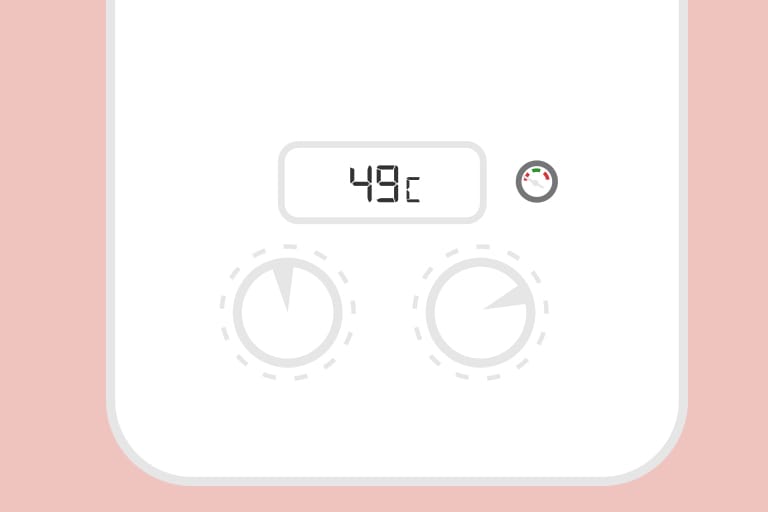
- Locate Your Boiler Control Interface: Locate the control dial or digital buttons on the front of your unit. Look specifically for the central heating icon (usually represented by a small radiator symbol), rather than the tap symbol used for domestic hot water.
- Identify the Current Flow Setting: On digital displays, press the radiator button once to reveal the current set temperature (often factory-set between 70°C and 80°C). On analogue units, note the current dial position.
- Lower the Heating Temperature to 60°C: Use the minus button or turn the dial anti-clockwise to lower the central heating setting down to 60°C. If your home is well-insulated, you can experiment with lowering it further down to 55°C.
- Leave Domestic Hot Water Unchanged: Ensure you leave your domestic hot water setting untouched (typically kept around 50°C–55°C) to maintain hot showers and prevent bacterial growth in non-combi hot water stores.
- Test Heating Performance Over 24 to 48 Hours: Run your heating as normal. Radiators will feel warm to the touch rather than scalding hot, and rooms will take slightly longer to reach target temperatures. However, your combi boiler will maintain consistent warmth far more efficiently.
Additional Energy-Saving Tips for Your Heating System
Lowering your flow temperature is part of a broader approach to maximizing efficiency across your entire heating setup:
- Keep Heating On Longer at Lower Levels: Because low-temperature heating warms rooms more gradually, set your thermostat to turn on 20–30 minutes earlier rather than cranking up the boiler temperature.
- Use Thermostatic Radiator Valves (TRVs): Fit TRVs to individual radiators so you only heat the rooms you actively use, reducing load on your combi boiler.
- Bleed Radiators Regularly: Remove trapped air pockets so water can circulate freely through the entire surface area of your radiators.
- Book an Annual Boiler Service: Regular maintenance ensures your heat exchanger remains clean and your unit operates at peak efficiency.
When to Contact a Professional Heating Engineer
If adjusting your control panel does not lower your energy bills or if you experience heating issues, consider reaching out to a professional:
- Radiators Remain Cold: If rooms fail to reach comfortable temperatures even after adjusting settings, your radiators may be undersized for low-temperature heating, or your system may require balancing.
- Persistent Fault Codes: If changing settings causes error messages or system lockouts on your display panel.
- Sludge Build-up: If radiators are hot at the top but cold at the bottom, your central heating circuit may need a professional powerflushing service to clear internal sludge and debris.
Always verify that any technician working on your heating unit is listed on the official Gas Safe Register before allowing work to begin.
At M&R Group, our team of experienced engineers assists homeowners across Bolton, Wigan, and Greater Manchester with professional boiler servicing, system upgrades, and efficiency optimisations. Contact our team today to keep your heating system running safely and cost-effectively all year round.