
How to Repressurise Boiler: 5 Easy Steps to Fix Low Pressure
How to Repressurise Your Boiler: A Complete Step-by-Step Guide
Repressurise Your Boiler: Guidelines
Waking up to cold radiators or a hot water system that refuses to kick in is a common frustration for UK homeowners. In many cases, the issue is not a costly breakdown but a simple drop in water pressure. Knowing how to repressurise boiler systems yourself can restore your central heating in less than ten minutes without waiting for a heating engineer.
At M&R Group, our Gas Safe registered engineers frequently answer questions about boiler maintenance and heating efficiency. Learning when and how to repressurise boiler equipment is one of the most effective DIY skills every homeowner should master. For broader advice on maintaining your home heating systems, explore our full library of heating and plumbing how-to guides.
What Is Ideal Boiler Pressure?
Central heating systems rely on a closed loop of water circulating through your boiler, pipework, and radiators. To move this water effectively around your home, the system requires adequate hydraulic pressure. Before you attempt to repressurise boiler circuits, you need to check your system’s current reading.
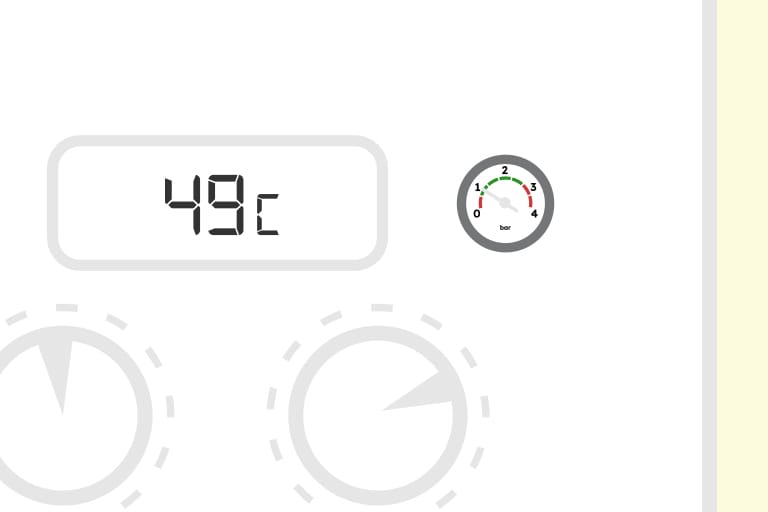
Your boiler displays its pressure via a physical dial (a pressure gauge) or a digital display screen on the front control panel.
Ideal Cold Pressure: Between 1.0 bar and 1.5 bar when the heating system is switched off and completely cool.
Normal Hot Pressure: Between 1.5 bar and 2.0 bar while the central heating is actively running.
Low Pressure: Anything below 1.0 bar (often indicated by a red zone on the dial or an error code on a digital display). This is the clear sign that you need to repressurise boiler pipework.
When water pressure falls too low—typically dropping below 0.5 bar—most modern combi and system boilers will enter a safety lockout mode to prevent internal damage. Knowing how to repressurise boiler units safely gets your heat back on quickly.
What Causes Your Boiler Pressure to Drop?
Before you repressurise boiler components, it is helpful to understand why the pressure dropped in the first place. Two primary issues account for the vast majority of pressure losses:
1. Bleeding Radiators
When you bleed radiators to remove trapped air pockets, air escapes along with a small amount of water. Releasing this trapped air increases the overall volume inside your heating circuit, which naturally lowers the system pressure. Always check your pressure gauge after bleeding radiators across your home, as you will almost certainly need to repressurise boiler systems shortly afterward. If you notice persistent cold spots on your radiators, consider booking a professional powerflushing service to clean out system sludge.
2. Minor System Leaks
Even a small drip from a radiator valve, thermostatic head, solder joint, or internal boiler component causes a gradual loss of pressure over days or weeks. If you find that you must repressurise boiler installations repeatedly, an active leak is usually the underlying cause.
Locating Your Filling Loop
To safely repressurise boiler water levels, you need to introduce fresh mains water into your central heating circuit using a filling loop.
Depending on the age and make of your boiler (such as Worcester Bosch, Vaillant, Baxi, or Ideal), your filling loop will typically look like one of the following:
External Braided Hose: A flexible silver metal hose with small lever valves at one or both ends, located underneath or adjacent to the boiler casing. On some installations, this hose is detached at one end and must be connected manually before you repressurise boiler valves.
Internal Keyless Lever: Common on modern boilers, this is a blue or white lever located directly on the underside of the boiler casing that you simply pull or turn.
Internal Keyed Link: Found on older Worcester Bosch models, where a small white plastic key slots into an opening on the underside of the unit and is turned to lock into place before opening the valve.
5 Steps to Repressurise Your Boiler
Switch off the power and allow the system to cool: Turn off your central heating at the main electrical switch or fused spur. Allow the system to cool down completely for at least 30 minutes. Top-up water from the mains is cold; introducing cold water into a hot heat exchanger can cause thermal shock and crack the component. Furthermore, warm water expands, giving an inaccurate pressure reading when you try to repressurise boiler valves.
Check and connect the filling loop: Locate the flexible braided filling loop underneath your boiler. If the hose is disconnected at one end, screw it firmly onto the second valve fitting by hand until tight. Keep a small cloth or towel underneath to catch any minor stray drips before you repressurise boiler lines.
Open the filling loop valves slowly: If your filling loop has two lever valves, open the first valve fully. Then, turn the second valve slowly (usually a quarter-turn counter-clockwise). You will hear the sound of cold mains water filling the central heating circuit.
Monitor the pressure gauge: Watch the needle on the pressure gauge rise steadily as water enters the system. As soon as the needle reaches 1.2 to 1.5 bar, immediately turn both valves back to their closed positions (quarter-turn clockwise). Do not allow the pressure to exceed 1.5 bar while cold.
Disconnect hose and restore power: If you connected an external flexible hose, disconnect the loose end as required by UK water supply regulations to prevent backflow into drinking water. Wipe away any small drips, switch the electrical power back on, and reset your boiler if a fault code was previously displayed.
What to Do If You Over-Repressurise the System
If you accidentally leave the valve open too long when trying to repressurise boiler loops and the pressure gauge needle creeps past 2.0 bar into the upper red zone (above 2.5 bar), do not panic.
You can easily release excess pressure by bleeding a radiator:
Ensure the heating is switched off.
Attach a radiator bleed key to the bleed valve of any radiator in your home.
Place a bowl underneath to catch water.
Turn the key anti-clockwise to release water until the boiler’s pressure gauge drops back down into the green zone (1.2 to 1.5 bar).
Tighten the bleed valve securely.
When to Call a Professional Gas Safe Engineer
While learning how to repressurise boiler units is a simple DIY task, certain situations require expert intervention from a qualified engineer:
Frequent Pressure Drops: If you have to repressurise boiler pipework more than twice in a single month, there is a leak within your system or a failing internal component (such as an expansion vessel or pressure relief valve).
Visible Water Leaks: If you notice water weeping from pipe joints, underneath the boiler casing, or around radiator valves.
Pressure Spikes: If the pressure rapidly shoots up above 3.0 bar whenever the central heating turns on.
Uncertainty: If you are unsure where your filling loop is or feel uncomfortable handling pipework valves to repressurise boiler controls yourself.
To ensure your boiler remains safe and compliant, make sure your engineer is registered on the Official Gas Safe Register. For full legal guidelines on home water connections and filling loop regulations, you can also consult the official Water Regs UK guidelines.
At M&R Group, our team of experienced Gas Safe registered engineers provides reliable boiler servicing, repairs, and central heating maintenance across Bolton, Wigan, and the wider North West region.