
Radiator Powerflush Explained: A Homeowner’s Complete Guide
What Actually Happens During a Radiator Powerflush? A Step-by-Step Walkthrough
If your radiators have cold spots, your boiler is making odd noises, or your heating takes an age to warm up, chances are someone has mentioned the words “radiator powerflush” to you. And if you’ve never had one before, the whole thing can sound a bit intimidating. What gets disconnected? How long does it take? Will it make a mess of your floors?
The good news is that a professional powerflush is a well-established, controlled procedure that a qualified engineer can usually complete in a single day. Here’s exactly what happens from start to finish, so you know what to expect before you book.
What Is a Radiator Powerflush?
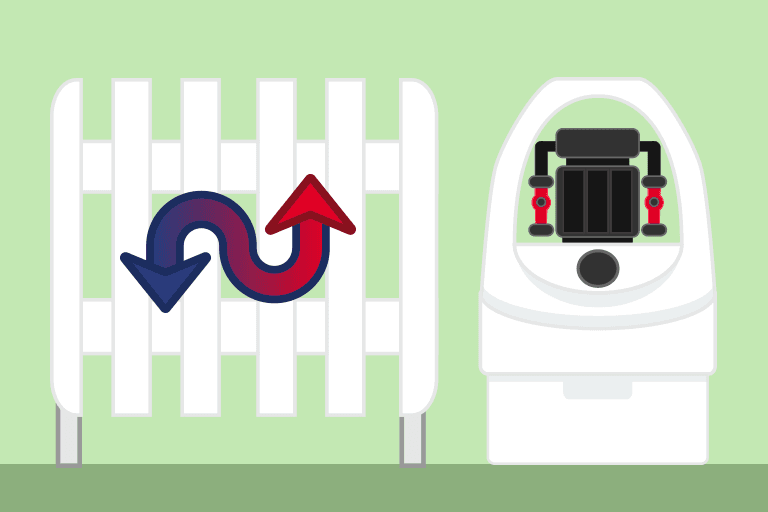
A radiator powerflush is a deep clean of your entire central heating system. Over the years, rust, sludge, and limescale build up inside your radiators and pipework. This black sludge, known technically as magnetite, restricts water flow, creates cold spots, and forces your boiler to work much harder than it should.
A specialist powerflushing machine pumps water and cleaning chemicals through your system at high velocity but low pressure, dislodging the debris and flushing it out. The result is a heating system that warms up faster, runs quieter, and costs less to run.
The Step-by-Step Process
Step 1: System Inspection and Setup
Before any radiator powerflush begins, your engineer will carry out a thorough inspection of your heating system. They’ll check the boiler, radiators, valves, and pipework, looking for any pre-existing leaks or weak joints that need attention first.
Floors and carpets near the boiler and radiators are protected with dust sheets, and the boiler is then isolated, ready for the flushing machine to be connected.
Step 2: Connecting the Powerflushing Machine
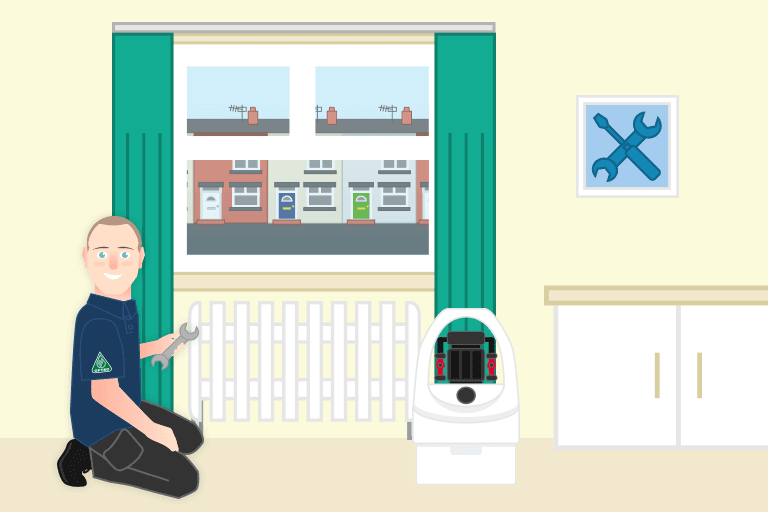
The powerflushing pump is connected to your system, typically at the pump or circulator point. This unit effectively replaces your boiler’s pump for the duration of the clean, allowing the engineer to circulate water and chemicals around your system under their full control.
Step 3: Adding the Cleaning Chemicals
Specialist cleaning agents are introduced into the water. The most common include:
- Sludge remover – breaks down magnetite and rust deposits
- Descaler – tackles limescale, especially important in hard water areas
- Neutraliser – rebalances the system water once cleaning is complete
These chemicals are circulated through every radiator and pipe to dissolve and loosen years of contamination.
Step 4: The Flush Itself
This is where the real work happens. The engineer works through each radiator one by one, agitating them with strong magnets and gently tapping with rubber mallets to dislodge stubborn deposits. Dirty water is then dumped to a drain and replaced with fresh, clean water.
Don’t be surprised by how black the water can look at this stage – it’s a clear visual sign your radiator powerflush was overdue.
Step 5: Final Rinse and Inhibitor
Once the water runs clear from every radiator, the system is given a final rinse to remove any chemical residue. A corrosion inhibitor is then added — this is the magic ingredient that protects your freshly cleaned system from sludge returning over the coming years.
Step 6: Testing and Sign-Off
The boiler is fired back up and every radiator is checked for even, full heat distribution. Your engineer will balance the system, bleed out any trapped air, and confirm that pressure and flow are exactly where they should be before signing off the job.
How Long Does a Radiator Powerflush Take?
For a typical three-bedroom home, expect the process to take between 4 and 8 hours. Larger properties, or systems with very heavy sludge buildup, can take a full working day or occasionally a little longer.
Signs You Might Need a Radiator Powerflush
- Radiators are cold at the bottom but hot at the top
- One or more radiators don’t heat up at all
- Your boiler makes banging, gurgling or kettling noises
- The heating is slow to come on, even on full
- You bleed dirty, black water from your radiators
- Your boiler keeps cutting out unexpectedly
If you’re nodding along to two or more of these, it’s time to seriously consider a flush.
Book Your Radiator Powerflush Today
At M&R Plumbing and Heating Ltd, our Gas Safe engineers have been carrying out professional powerflushes across Bolton, Wigan, Chorley, Horwich, and the surrounding areas since 1997. Get in touch today for a no-obligation quote on a radiator powerflush for your home, and start enjoying warmer rooms, lower bills, and a quieter boiler.