
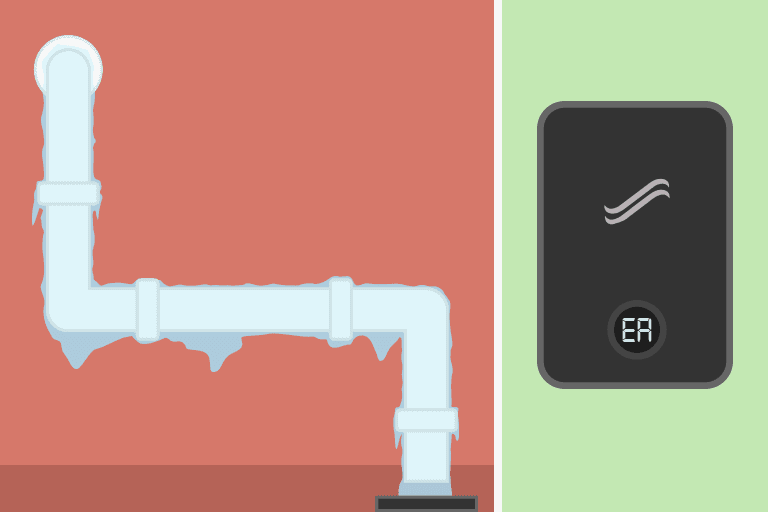
Frozen Condensate Pipe, Simple Fixes
Frozen Condensate Pipe? The Simple, Safe Winter Fix for Your Boiler
There is nothing worse than waking up on a frosty morning in the North West to a cold house, no hot water and a boiler flashing a fault code at you. If the temperature dropped below freezing overnight and your boiler is making a gurgling noise, the cause is very often a frozen condensate pipe.
The good news is that this is one of the most common winter boiler problems we see at M&R Group, and in many cases you can fix it yourself in a few minutes without any tools. In this guide, our engineers explain what a condensate pipe does, how to spot a frozen one, how to thaw it safely and how to stop it happening again.
Frozen Condensate Pipe Guide
What Is a Condensate Pipe?
Almost every gas boiler fitted in the UK since 2005 is a condensing boiler. These boilers are far more efficient than older models because they capture extra heat from the waste gases before they leave the flue. As those gases cool, they turn into a slightly acidic water called condensate.
The condensate pipe is a plastic pipe, usually white or grey, that carries this water away from the boiler and into a drain. On many homes the pipe runs through an outside wall and down to a gully or soil stack. That outdoor section is exposed to the weather, and when the water sitting inside it freezes, the pipe blocks.
Once the pipe is blocked, the condensate has nowhere to go. It backs up into the boiler, and the boiler’s safety system shuts it down to protect it. This is why a frozen condensate pipe can stop your heating and hot water completely, even though there is nothing actually broken.
Signs of a Frozen Condensate Pipe
A frozen condensate pipe usually shows up on the coldest mornings of the year, often after a few nights of hard frost. Look out for these signs:
Your boiler has stopped working: no heating and no hot water, often first thing in the morning.
A fault or lockout code on the display: the code will vary depending on your boiler make and model. Your boiler manual will tell you what it means.
A gurgling or bubbling noise: this is the condensate trying to drain through a blocked pipe.
Ice on the outside of the pipe: you may see frost or ice at the end of the pipe where it meets the drain.
The boiler restarts, then cuts out again: if you press reset and the boiler fires briefly before locking out, the blockage is still there.
If you are not sure which pipe is the condensate pipe, look underneath your boiler. It is normally the plastic pipe, as opposed to the copper pipes that carry gas and water. Follow it to see where it leaves the house.
How to Thaw a Frozen Condensate Pipe Safely
If your pipe is easy to reach at ground level, you can usually clear a frozen condensate pipe yourself. Here is the method our engineers recommend:
1. Find the Frozen Section
Trace the pipe from the boiler to where it exits the house. The blockage is usually at the very end of the pipe, at a bend, or anywhere it sags and water can collect. These are the spots that freeze first, so feel along the pipe for the coldest point.
2. Use Warm Water, Not Boiling Water
Fill a kettle and let it cool down for a while, or fill a watering can with warm water from the tap. Slowly pour it over the frozen section and along the outside run of the pipe. The water should be warm to the touch, never boiling. Boiling water can crack the plastic pipe and leave you with a much bigger problem.
3. Try a Hot Water Bottle or Heat Pack
Holding a hot water bottle or a microwavable heat pack against the pipe is another gentle way to thaw it, especially at a bend. It may take a little longer, but it is a safe option and you can leave it in place while you work on the rest of the pipe.
4. Reset Your Boiler
Once the ice has melted, reset your boiler following the instructions in your manual. It should fire up and run as normal. If the pressure has dropped while the boiler was off, our guide on how to repressurise a boiler walks you through topping it up.
If the boiler still will not restart after a couple of attempts, stop and call a Gas Safe registered engineer. There may be another fault, or the pipe may have frozen somewhere you cannot reach.
What Not to Do
Clearing a frozen condensate pipe is a simple job, but please keep safety in mind:
Never use boiling water: it can split the pipe or the joints.
Do not climb ladders in icy weather: if your pipe runs high up the wall, leave it to a professional.
Do not remove the boiler casing: only a Gas Safe registered engineer should work inside a gas boiler.
Do not keep pressing reset: repeated resets will not clear the ice and can mask a different fault.
Watch your step: the warm water you pour can refreeze on the path, so put some grit or salt down afterwards.
You can check that any engineer working on your gas appliances is properly qualified on the Official Gas Safe Register.
How to Stop Your Condensate Pipe Freezing Again
Once you have had one frozen condensate pipe, it is likely to happen again on the next cold snap unless something changes. These are the most effective ways to protect your boiler this winter:
Insulate the Outdoor Pipe
Weatherproof pipe lagging from a DIY store is cheap and quick to fit around the outside section of the pipe. It will not stop freezing in the harshest weather, but it makes a real difference on most frosty nights.
Upgrade to a Wider Pipe
Many older installations use a narrow pipe outside. Manufacturers now recommend a wider pipe for any external run, because it takes much longer to freeze solid. Our engineers can swap this over quickly during a visit.
Reroute the Pipe Inside
Where possible, the best fix is to run the condensate pipe to an internal drain, such as a kitchen sink waste or an internal soil stack. Inside the house it stays warm and cannot freeze.
Keep Your Heating Ticking Over
During very cold spells, setting your heating to stay on at a lower temperature overnight keeps warm condensate moving through the pipe, which helps stop ice forming.
Book Your Annual Service Before Winter
During a boiler service, our engineers check the condensate trap and pipework, and we can point out any runs that are likely to freeze. Spotting a vulnerable pipe in autumn is much better than finding out on a freezing January morning.
When to Call an Engineer
You should get professional help if the pipe is out of reach, if it is cracked or leaking, if the boiler will not restart once it has thawed, or if your frozen condensate pipe keeps coming back every winter. Our Gas Safe registered team can thaw the pipe, check your boiler is running safely, and make a lasting improvement so it does not happen again.
If your boiler shows a fault that is not linked to the cold, our boiler repairs team can track it down. As Worcester Bosch accredited installers and service partners, we work on all major brands, including Worcester Bosch, Vaillant, Baxi, Ideal and Glow-worm.
Stay Warm All Winter with an M&R Care Plan
A breakdown in the middle of winter is stressful, and engineers are at their busiest when the weather turns cold. With one of our domestic boiler care plans, your annual service is included and you get priority callouts when you need help most. We also offer plans for landlords and commercial properties.
Frequently Asked Questions
Is a frozen condensate pipe dangerous?
No, it is not dangerous in itself. Your boiler shuts down as a safety measure, so it will simply stop working until the ice is cleared. If you ever smell gas, though, leave the property and call the National Gas Emergency number on 0800 111 999.
How long does it take to thaw a frozen condensate pipe?
If the pipe is easy to reach, it usually takes between five and twenty minutes with warm water or a heat pack. Longer outdoor runs or pipes with several bends may take a little longer.
Can a frozen condensate pipe damage my boiler?
The boiler’s safety system shuts it down before any damage is done, so the boiler itself is normally fine. However, repeated freezing can crack the pipe, and pouring boiling water on it can damage it, so it is worth getting the pipe upgraded if it keeps happening.
Will my boiler work again once the pipe has thawed?
In most cases, yes. Once the ice has cleared, reset your boiler and it should restart. If it does not, please get in touch with our team and we will help.
Need Help With Your Boiler This Winter?
A frozen condensate pipe is a nuisance, but with a little warm water and the right precautions it does not have to ruin your day. If you would rather leave it to the experts, or you want your pipework upgraded so it does not freeze again, our friendly team is here to help across Bolton, Wigan, Chorley, Bury and the surrounding areas.
Call us on 01204 690957 (Bolton) or 01942 504080 (Wigan), or contact M&R Group online to book a visit.